At its core, my art is about Becoming.
From the moment we are born to the day we leave this earth, we are in a perpetual state of responding to our experiences, thoughts, and emotions. We decide who we are in the minutest moments and the biggest decisions. Everyday, we are learning how to hold fast to what makes us better, and let go of what doesn’t.
My art has been in that exact same state of becoming since 2010.
Truthfully, I never intended to make “Art with a capital A.” Even though I come from some pretty healthy art stock. For example, my Aunt Ginger was one of the first women to graduate from the Memphis College of Art, my sister is also an artist, and my parents were both deeply artful people. However, making something of this magnitude was never on my radar.
I started out as a crafty-minded woman. When I needed a more substantial paycheck in the 1990s, I heard that Tennessee was paying folks to get a degree in Art Education. So, I went back to the university of Memphis in 1993. Teaching art was the factor that changed me from the inside out. Investigating the history of art introduced me to artists who championed material culture, visual language, and personal transformation through conceptual introspection.
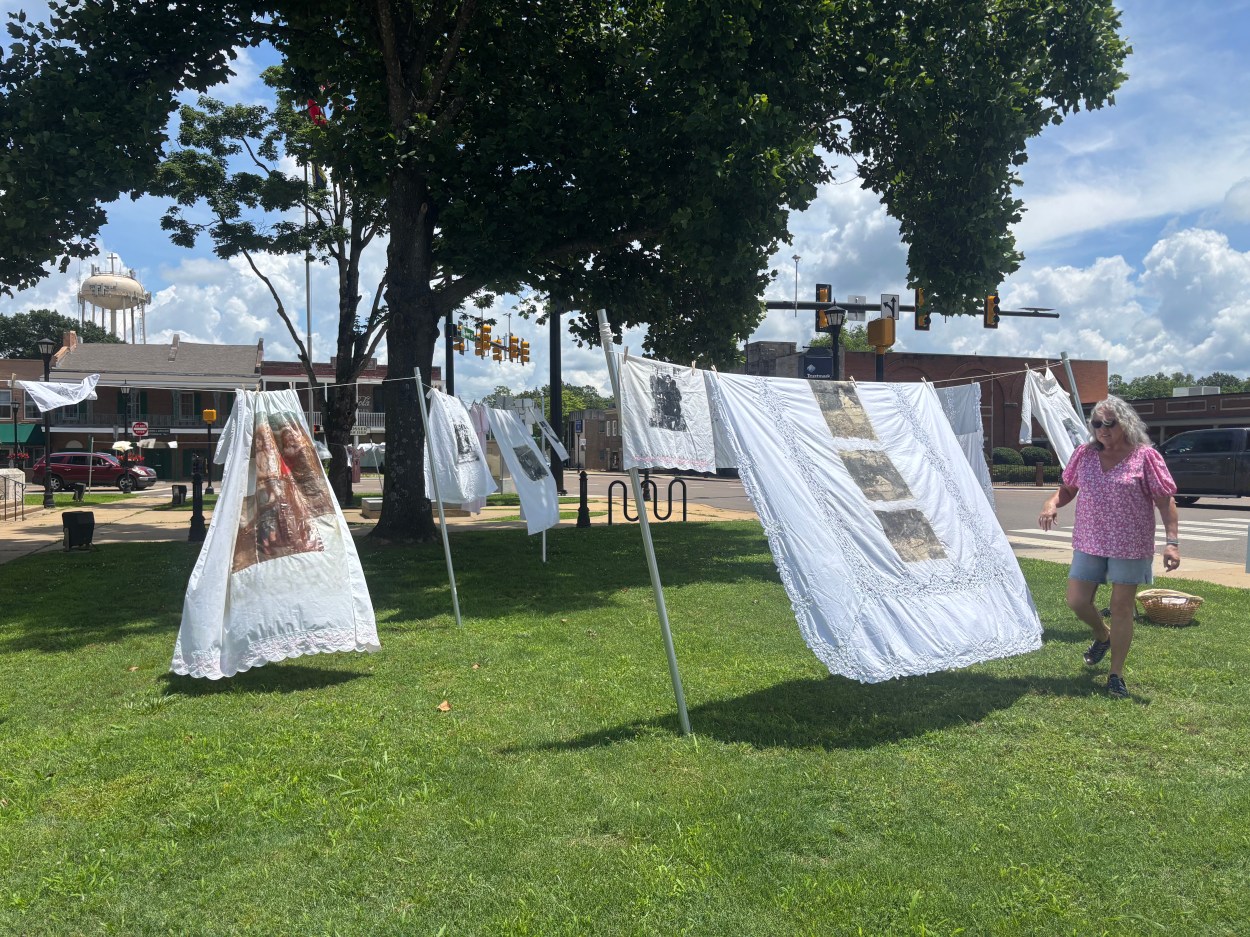
In 2010, while I was teaching image transfer processes, my mom gave me some vintage linens and lingerie from my late grandmother. I have always hated waste. Inspired by some exceptional students, I decided to test our transfer methods on these family heirlooms. This experimentation resulted in the work you see around you today.
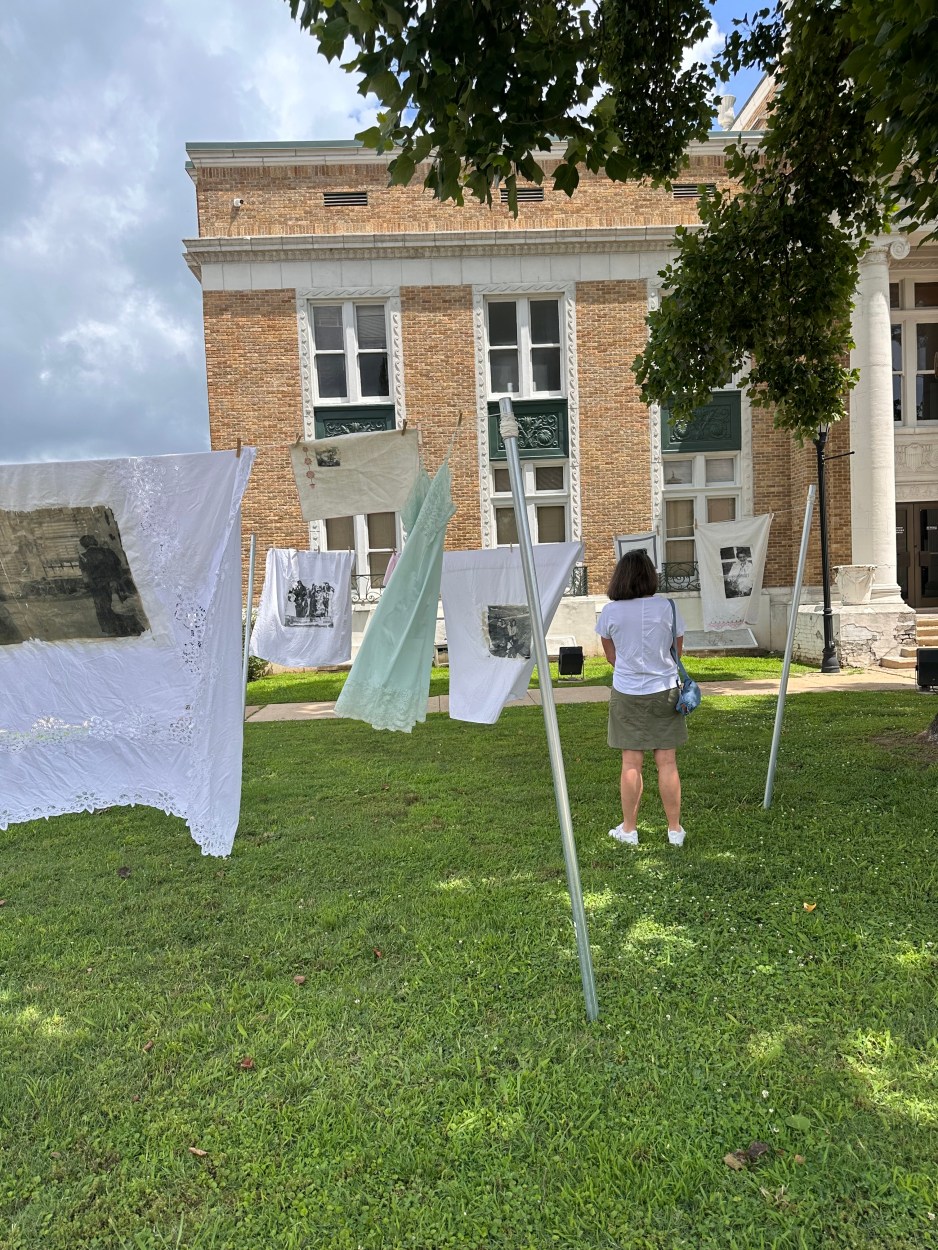
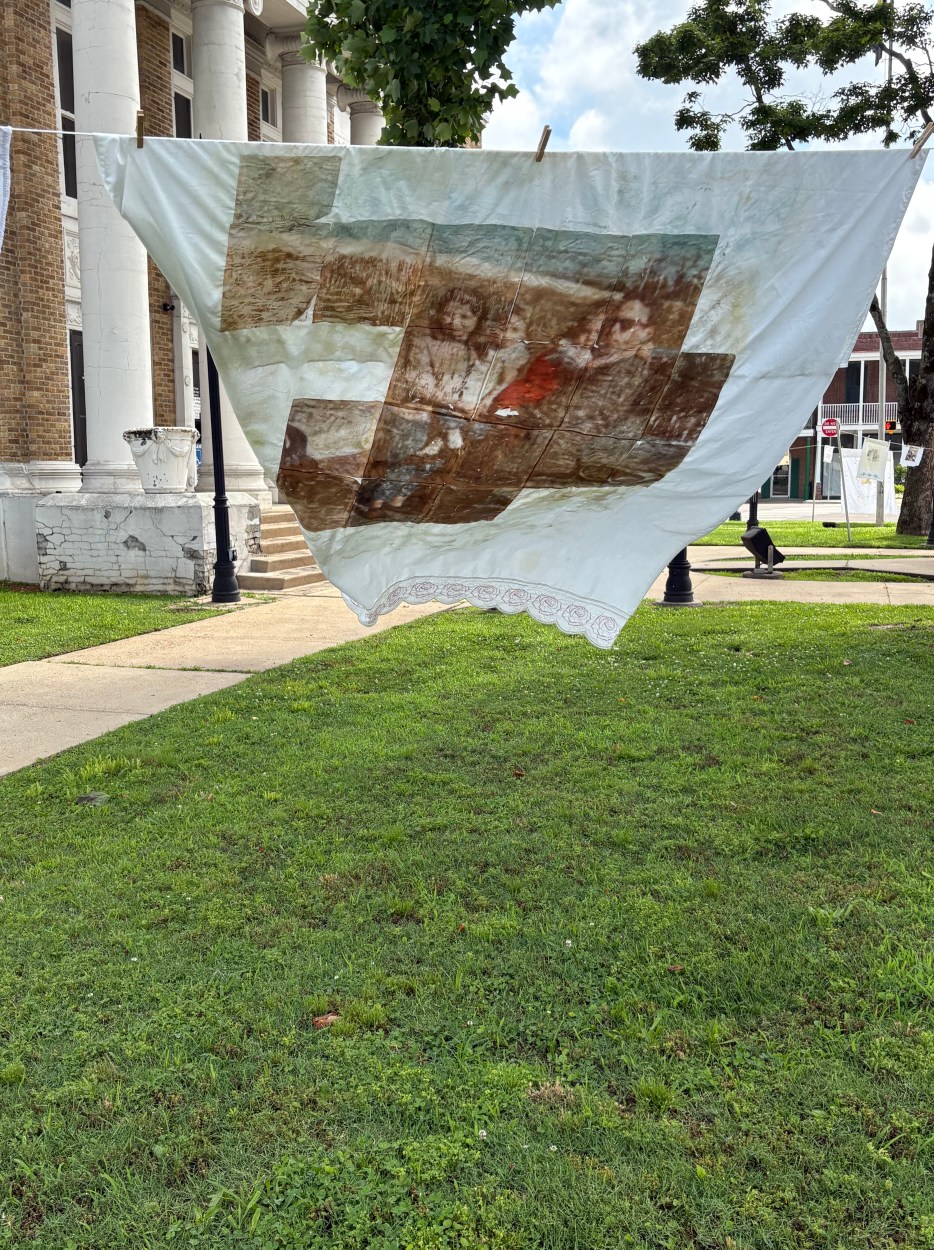
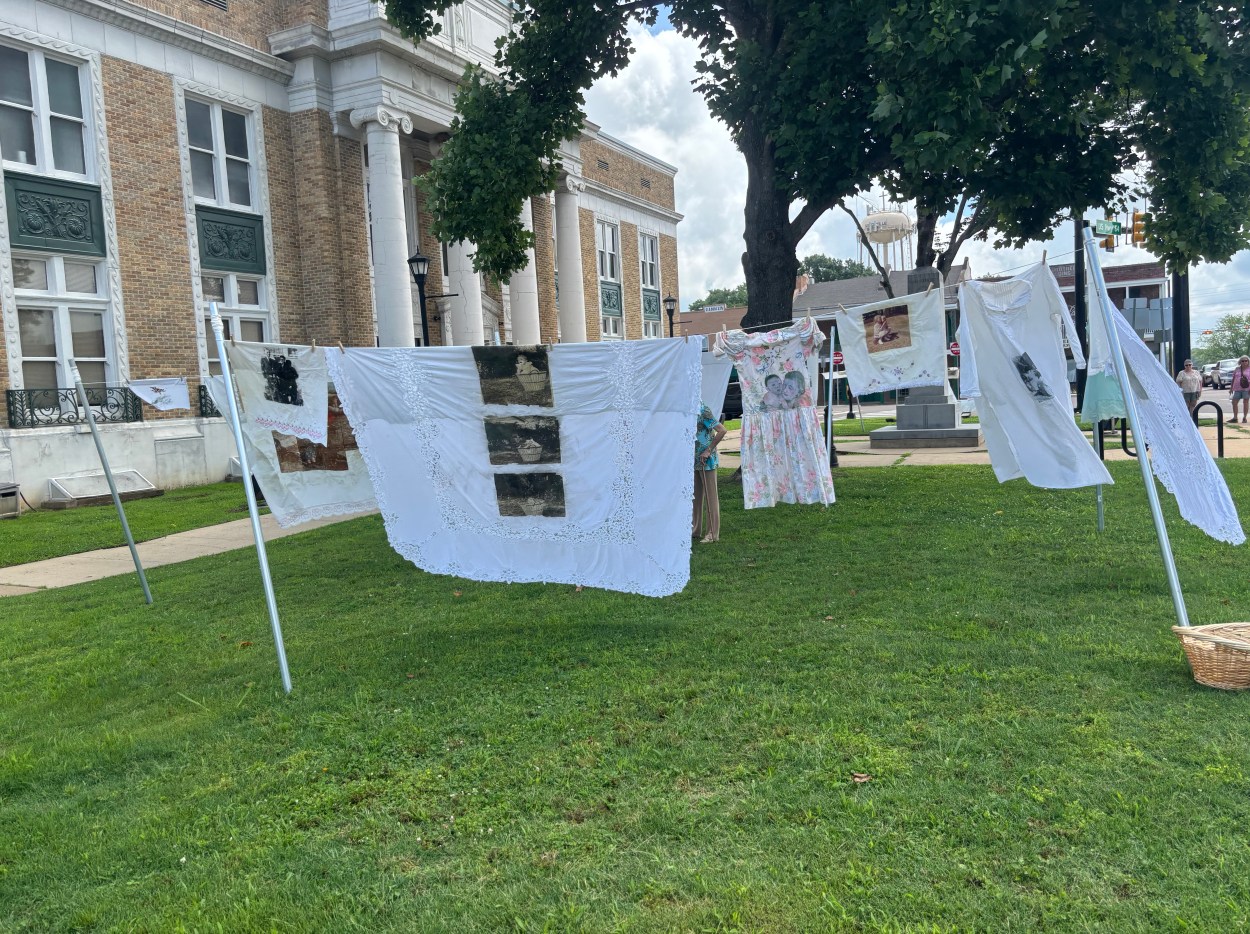
Each piece on the clothesline features images from my history or that of someone who donated copies of family photos to me. I use various chemical and physical transfer methods—like acetone, Gesso, CitraSolv, Polyacrylic, and clear contact paper, with Liquitex matte medium being the most successful of all of these.
My process mirrors how I think about us/human beings. We are multifaceted: physical, emotional, intellectual, relational. These pieces were saved from the obsolescence of dark drawers and given new public life. They are all of what we are: physicality that prompts emotions and thoughts in each of us and hopefully making connections from one to another by considering those who have cared for us all. Most especially mothers of all kinds: grandmothers, sister-mothers, friend-mothers, all the mothers.
A note about the materiel: Just like the images I transfer onto these fabrics, we don’t always retain a full, perfect picture of our experiences. Sometimes a Xerox copy embeds perfectly, and sometimes only portions of the image take. The difference between us and the material is we get to choose how much of an experience, word, or emotion stays with us. We control the remainder. Unlike inanimate materials that just resist or absorb as is its nature.
Ultimately, all art reminds us of the foundational truths of life: we didn’t make ourselves, this world is broken and we are lost. Because we are powerless to change certain aspects of our lives, we need a savior or fixer to ultimately move us toward the best of things. Why? because each of our default settings is to work things for our own good which is often to selfish to work for the collective of us all.
And lastly, we know we are made for more than this. Even as children, when we look at the leaves falling or the clouds forming we know we are made for something beyond here; Something grander.
So, remember: every day, in each and every moment we have choices of how we will respond to any particular situation, thought or emotion. Each choice forms us into BECOMING. We must choose to become those who make life better, rather than making life, well… worse.
Remember: everything we do is a response which leads us into a state of Becoming.
Be mindful.
Thank you so much for being here, and a special thank you to Sarah Clark, Nysha Nelson, and Mendi Donnelly for making this formal showing possible!

